Hola {{first name | estudiante}},
Bienvenido/a to your weekly check-in, where we keep the Spanish part of your day with practical tips, bite-sized lessons, and learning resources.
You know how I've been training for that marathon? Well, good news, I finally figured out my IT band issue! Turns out I needed to add static stretching and strength/mobility workouts to complement all that running.
But here's why this injury taught me something important about language learning: just like marathon training typically requires consistent preparation, building Spanish conversational fluency requires that same steady, strategic approach.
According to the CEFR, conversational fluency (B2 level) develops after 540-620 hours of intentional practice. A timeframe achievable in 12-24 months through consistent habits.
When my IT band was acting up, I couldn't just run harder – I needed different types of training. Same with Spanish! If you're feeling stuck, maybe it's time to add some "cross-training" to your Spanish routine:
💪🏼 Spanish Cross-Training Workouts:
Shadowing sessions – Listen to Spanish audio and speak along simultaneously (builds fluency muscle memory)
Input flooding – Immerse yourself by changing your phone settings, watching shows with Spanish subtitles, or listening to Spanish podcasts during commutes (research shows this works)
Language time machines – Write yourself a letter in Spanish, hide it for a week, then read it to see your progress
Structured input practice – Do activities where you can't succeed without paying attention to specific grammar patterns.
Research shows that language learning, like athletic training, requires pacing yourself with frequent, manageable sessions rather than cramming. The key is consistency over intensity!
Speaking of consistency, let’s practice with the weather in Austin, TX, today.
🌤️ ¿Cómo está el tiempo hoy?
Hoy hace muchísimo calor, la temperatura está en 97 (noventa y siete) grados. Está muy soleado 🌞
📚This Week's Lesson: The Magic of "SE Impersonal"
One of Spanish's most useful (and confusing) constructions is the SE impersonal. Think of it as Spanish's way of saying "people do this" or "one does that" without specifying who. It's like the English "one does" or "you can" but much more commonly used!
How It Works:
SE + 3rd person singular verb
The beauty of SE impersonal is that it removes the need to specify WHO is doing the action. This makes it perfect for:
General statements about how things are done
Polite instructions without sounding bossy
Cultural observations without pointing fingers
Everyday Examples:
🍽️ Restaurant/Food:
Se come tarde en España = "People eat late in Spain"
Se puede pagar con tarjeta = "You can pay with a card"
Se sirve vino con la comida = "Wine is served with the meal"
🏢 Work/Business:
Se trabaja de lunes a viernes = "Work is done Monday to Friday"
Se necesita experiencia = "Experience is needed"
Se prohíbe fumar aquí = "Smoking is prohibited here"
🚗 Transportation/Directions:
En Madrid se toma el metro = "You take the subway in Madrid"
Se cruza la calle aquí = "You cross the street here"
El tren se espera aquí = "You wait for the train here”
💬 Common sayings:
Se dice que... = "They say that..." / "It's said that..."
Se sabe que... = "It's known that..."
Se cree que... = "It's believed that..."
Why It's So Useful:
Notice how SE impersonal sounds more natural and less direct than saying "Tú debes hacer..." (You must do...). It's like the difference between "One should arrive early" vs "You must arrive early" - same meaning, but the first sounds more polite and universal.
Practice Audio Transcript:
Listen to this conversation and notice how SE impersonal is used naturally:
María: Hola, disculpe, ¿Cómo se llega al centro desde aquí?
Carlos: Se toma el metro línea 2 y se baja en Sol. Se camina cinco minutos y ya está.
María: ¿Y se puede comprar el billete en la estación?
Carlos: Sí, se compra en las máquinas. No se necesita efectivo, se puede pagar con tarjeta.
María: Muchas gracias. Que tenga un buen día.
Carlos: Hasta luego.
Notice how SE impersonal makes instructions feel less direct and more polite – perfect for giving directions or general advice!
🧩 Mini Quiz: Test Your SE Impersonal Comprehension!
Choose the correct answer:
In Spain, _______ muy tarde.
A) se cena
B) se cenan
C) cenas
_______ que estudiar más español.
A) Se necesitas
B) Se necesita
C) Se necesitan
¿Cómo _______ esta palabra?
A) se pronuncia
B) se pronuncian
C) pronuncia se
En México _______ mucho picante.
A) se comen
B) se come
C) comes se
_______ español en 21 países.
A) Se hablan
B) Habla se
C) Se habla
🆚 English & Spanish:
This week I'd like to share one of my Instagram reels from our Vokally language school account that perfectly captures something we often don't realize about Spanish!
Check it out here: If English were spoken like Spanish (@vokallylife)
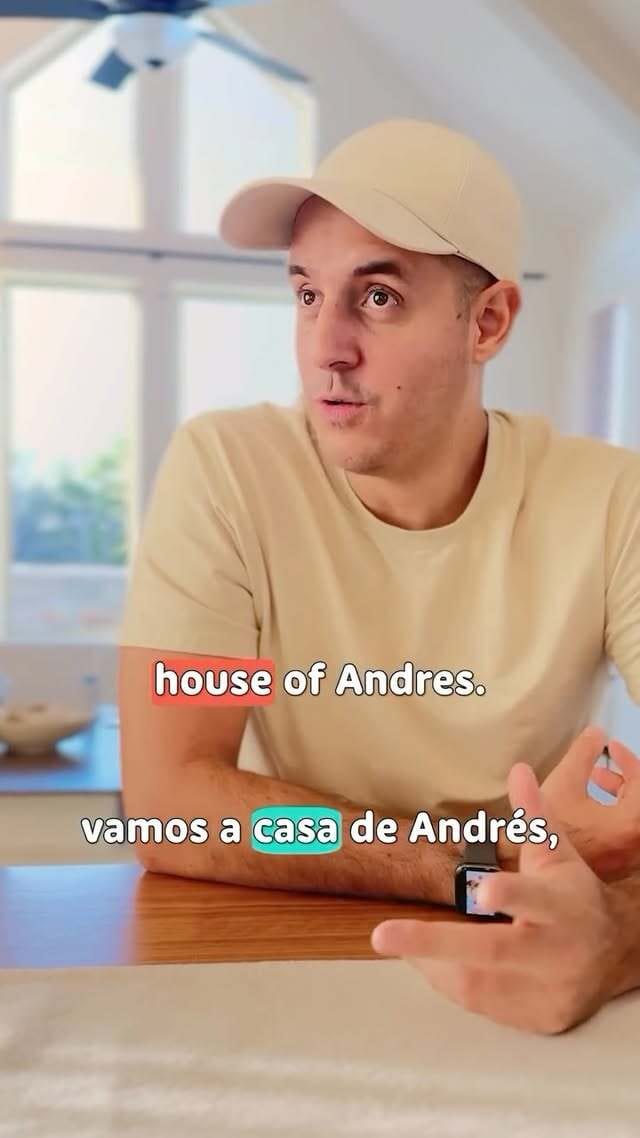
This reel shows how English would sound if we followed Spanish pronunciation rules!
Understanding these differences helps us be more patient with ourselves (and others) when learning.
¡Gracias por tu interés en aprender Español!
Espero que estos correos te sean útiles en tu camino con el español. Recuerda: cada pequeño paso cuenta.
¡Un abrazo fuerte!
Alejandro Nuñez
Fundador y Director de New Way Spanish (pronto Vokally)