

Hola {{first_name}} 👋🏻
Espero que estés muy bien. Bienvenido/a a Master Spanish Weekly.
A weekly email with useful Spanish and cultural references, plus short practice, so Spanish becomes part of your day.
En el correo de hoy:
⛪ Quick story: My son's primera comunión
🇦🇷 Lesson: 10 Argentine Expressions You Should Know + Reel
❓ Mini Quiz: 5 questions to test yourself
💙 Gracias.
⛪ Primera Comunión
Today my son is having his primera comunión (first communion). So right now I'm probably sitting in la misa (mass) with my family.
In Latin American culture, this is a big deal. The whole family shows up. There's food after. It can be as simple as lunch at home or as big as a full party with decorations, a cake, and a DJ. Either way, nobody leaves early.
Ahora, vamos a la clase de hoy.
🇦🇷 10 Argentine Expressions You Should Know
As you probably know, Spanish is spoken differently depending on where you are. The Spanish you hear in Mexico is not the same as the Spanish you hear in Argentina. Same language, different flavor.
Today we're going to Argentina. These are expressions that Argentines use all the time.
Our instructor Carla, who is from Argentina, explains 5 of them in our latest reel.
👉 Watch the reel:
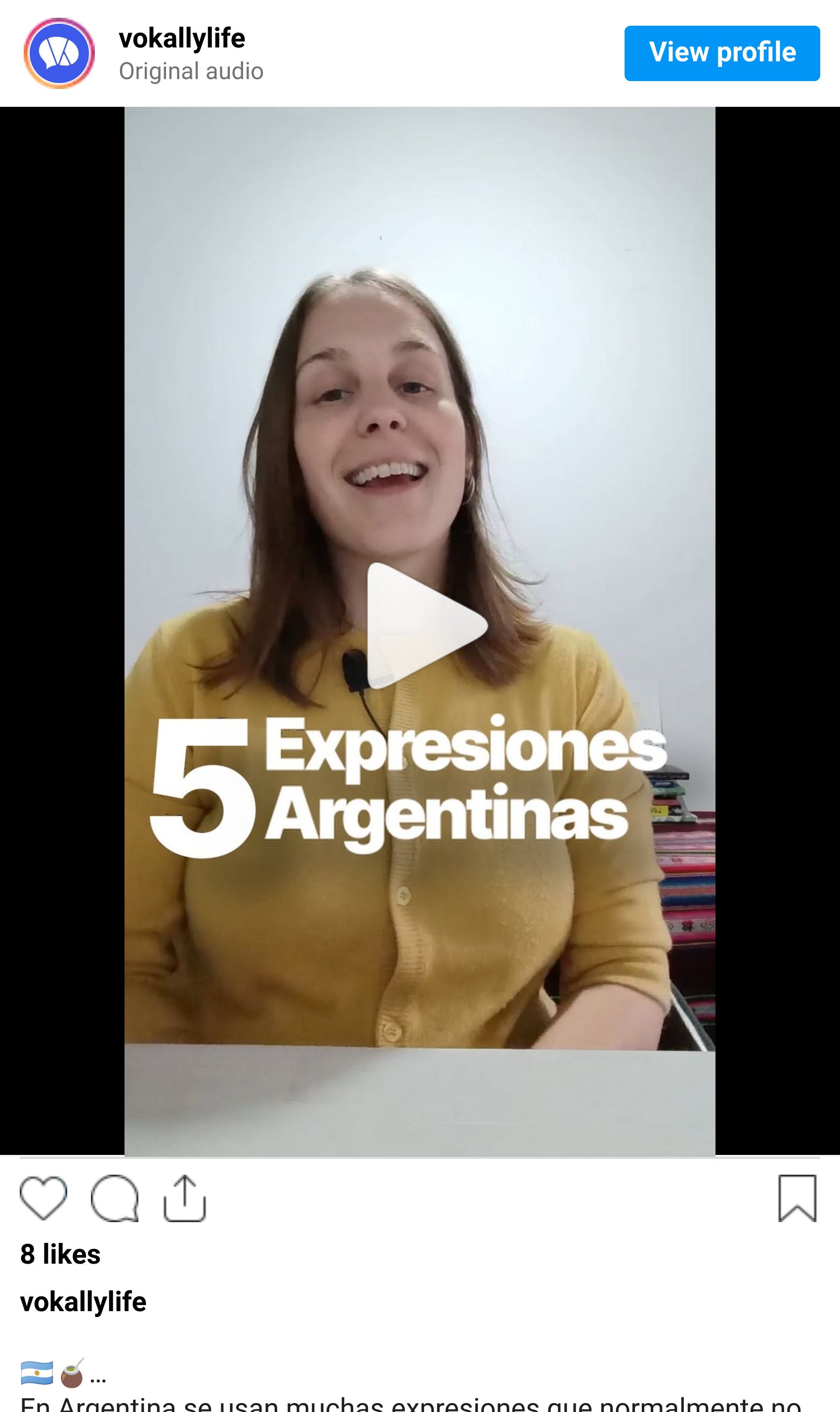
Here are the 10 Expressions You'll Only Hear in Argentina
1. Ser un capo / una capa: Someone who's really good at what they do.
— ¿Viste el gol de Messi? — Sí, es un capo. 🐐
2. Re: Used to intensify an adjective, like saying "really" or "super." Argentines use this constantly.
— ¿Cómo estuvo la fiesta? — Re buena. La pasé re bien.
3. Laburo: Means "work." The verb form is laburar (to work).
— ¿Dónde es tu laburo nuevo? — En el centro. Estoy re contento.
4. Ni en pedo: A very informal way of saying "no way" or "not a chance."
— ¿Vamos a correr a las 6 de la mañana? — Ni en pedo. 🙅♂️
5. Tenerla clara: When someone really knows what they're doing.
— Tu profesora explica muy bien. — Sí, la tiene re clara. 🧠
6. Boludo/a: Between friends, it's like saying "dude." With strangers or in the wrong tone, it's an insult. Context is everything.
— Boludo, ¿viste el partido anoche? — Sí, no lo podía creer.
7. Quilombo: A mess, a disaster, total chaos.
— ¿Cómo estuvo el tráfico? — Un quilombo. Tardé dos horas.
8. Guita: Slang for money.
— ¿Vamos a cenar afuera? — No tengo guita hasta el viernes.
9. Tomate el palo: Get out of here, leave. Can be playful or serious depending on tone.
— Dale, tomate el palo que tengo que laburar.
10. Estar re caliente: To be really angry (not related to temperature).
— Mi jefe está re caliente porque llegué tarde. — Uy, cuidado.
Let’s test your knowledge!
Mini Quiz: 🇦🇷 Argentine Expressions Edition
1. Your Argentine friend says: "Ese chef es un capo." What do they mean?
a) He's the boss b) He's really good at what he does c) He's famous
2. Someone says: "No tengo guita." What are they telling you?
a) They're not hungry b) They don't have money c) They don't have time
3. You hear: "La reunión fue un quilombo." What happened?
a) It went great b) It was very long c) It was a total mess
4. A friend says: "Ni en pedo voy a esa fiesta." What do they mean?
a) They'll go later b) No way they're going c) They'll go if you go
5. Someone tells you: "Está re caliente con vos." What's going on?
a) They like you b) They're really angry at you c) They're hot
💙 Gracias
Gracias por leer mi newsletter y por tu interés en aprender más Español.
¡Hasta la próxima semana!
Te envío un gran abrazo,
Alejandro, Founder & Director @ Vokally, Spanish that connects!
